
Air Purifier Placement Mistakes That Waste Half the Machine
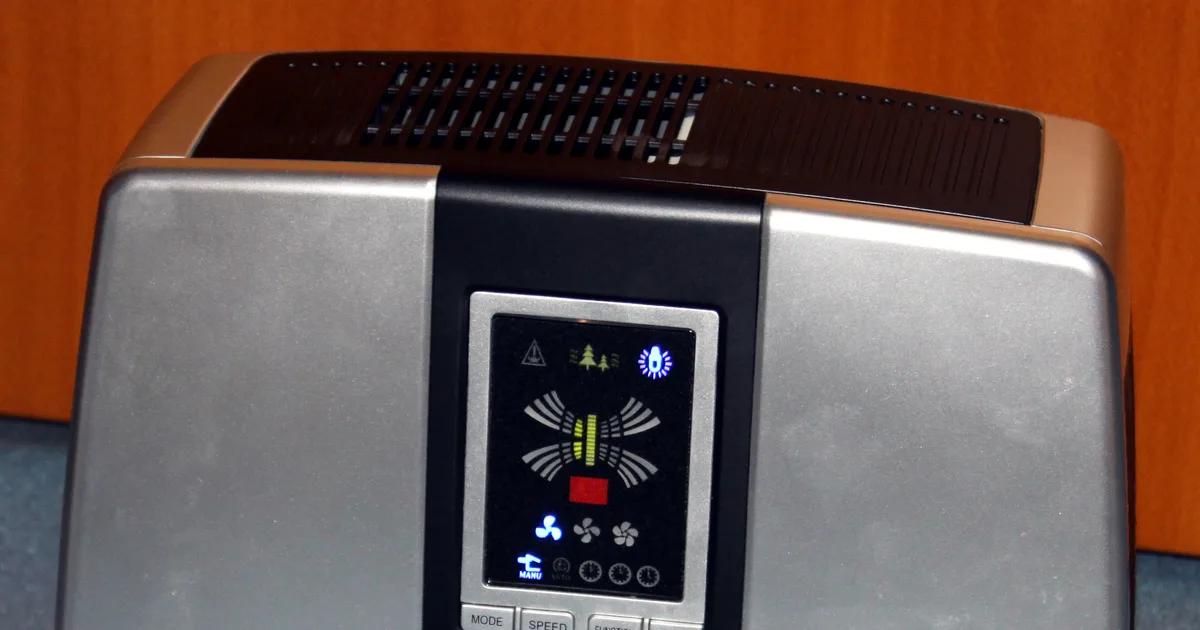
Most disappointment with air purifiers comes down to placement rather than the machine. A unit needs to move a large volume of air through itself continuously, and the things that stop it doing that are mostly free to fix.
Give it room to breathe
The most common mistake is pushing a purifier into a corner or tight against furniture. Intakes are usually on the sides, back or bottom, and blocking them throttles airflow directly — the fan works just as hard and processes far less air.
Manufacturers specify a clearance, typically something like a foot on all sides and more at the outlet. Respect it. A unit with 30cm of space around it can substantially outperform the identical unit wedged between a sofa and a wall.
Also check where the outlet points. Many purifiers exhaust upward, and a unit under a low shelf or table recirculates its own clean air rather than mixing it into the room.
Put it where you actually are
Air purifiers clean the air near them far faster than air across the room. That has a practical consequence: the best position is near where you spend time, not in a neutral corner.
For allergy sufferers, the bedroom usually matters most — you spend seven or eight uninterrupted hours there, breathing deeply. A purifier running in the bedroom overnight does more for symptoms than one in a living room used for two hours in the evening.
If pets are the trigger, place it near where they sleep rather than where they occasionally walk.
One unit, one room
Air does not move usefully between rooms through a doorway, and no consumer purifier cleans a whole house. A unit rated for 1,500 square feet is rated for an open space of that size, not for a house totalling that floor area.
So clean air in the bedroom and the living room means two units. This is an argument for choosing on CADR-per-dollar rather than buying one large showpiece — two well-placed mid-size units usually beat one big one in a hallway.
And close the door. A purifier working in a room with the door open is competing with the rest of the house, which is a fight it loses.
Close the windows, with one exception
An open window means the purifier is filtering the outdoors. During high pollen, wildfire smoke or heavy traffic pollution, keep windows closed and let the unit work on a fixed volume of air.
The exception is that homes still need ventilation for carbon dioxide and humidity. The sensible pattern is purifying with windows closed most of the time, and ventilating deliberately when outdoor air quality is good — which is the opposite of leaving a window permanently ajar.
Run it continuously
Purifiers work by repeatedly cycling the room's air, and the benefit accumulates. Running one for an hour before bed achieves far less than running it all day on a lower setting.
This is the strongest practical argument for oversizing: a larger unit at speed one is quieter and cleans more than a smaller unit at speed four, and a quiet unit is one you leave running rather than turn off. Noise is the main reason purifiers end up switched off, and the fix is buying more capacity than the room strictly requires.
If you use auto mode, note that the sensor only samples air reaching the sensor — a unit in a poorly circulating position may report clean air while the room is not.
Maintenance that keeps it working
A clogged filter is a purifier that looks like it is working and is not. Filters have a service life — commonly six to twelve months for HEPA, often less for carbon, and considerably less in a smoky or high-pollen environment.
Three practical points. Vacuum or rinse the pre-filter regularly if yours has a washable one; it catches hair and large dust and meaningfully extends the life of the expensive filter behind it. Never wash a HEPA filter unless the manufacturer explicitly says it is washable — water damages the media and destroys its efficiency. And check the filter cost and availability before buying a machine at all, because a cheap unit with expensive proprietary filters is not cheap over three years.
What a purifier will not do
Setting expectations honestly. It will reduce airborne particulate — dust, pollen, dander, smoke — and, with adequate activated carbon, noticeably reduce odours. Many allergy sufferers report better sleep with an adequately sized unit in the bedroom.
It will not fix mould, which requires removing the moisture source rather than filtering spores. It will not remove dust already settled on surfaces. It does not manage humidity, which is a different appliance. And it cannot compensate for a house that is not ventilated at all.
One caution worth repeating: if your unit has an ioniser, check whether it can be switched off and whether the model is certified low-ozone. Ozone is a respiratory irritant, and ozone generators sold as purifiers are a category health authorities have warned about repeatedly. Mechanical filtration does not have this problem.
Judging whether it is actually working
Air purifiers give little feedback, which makes it easy to run one badly for months. Three checks help.
An inexpensive air quality monitor measuring PM2.5 is the most direct evidence. Place it across the room from the unit, not beside it, and watch whether readings fall over an hour with the door closed. This also tells you honestly whether auto mode is responding sensibly.
Dust accumulation on hard surfaces is a slower but genuine signal. Owners of correctly sized units in bedrooms commonly notice less settled dust within a few weeks.
Your own symptoms. For allergy sufferers this is the measure that matters. Give it two or three weeks in the bedroom with the door closed before judging — a few evenings in a living room is not a fair test.
If readings barely move, work through the usual causes in order: clearance blocked, door open, unit undersized for the room, filter overdue, or the fan set too low for the space.
If you are shopping, our ranked comparison of air purifiers covers CADR, filtration and running costs, scored against the criteria in our rating methodology.
This is general information, not medical advice. If you have asthma or a significant respiratory condition, discuss air quality measures with a clinician. Clearance requirements and filter schedules vary by model — follow the manufacturer's manual.