
EV Charging at Home vs Public: What It Really Costs
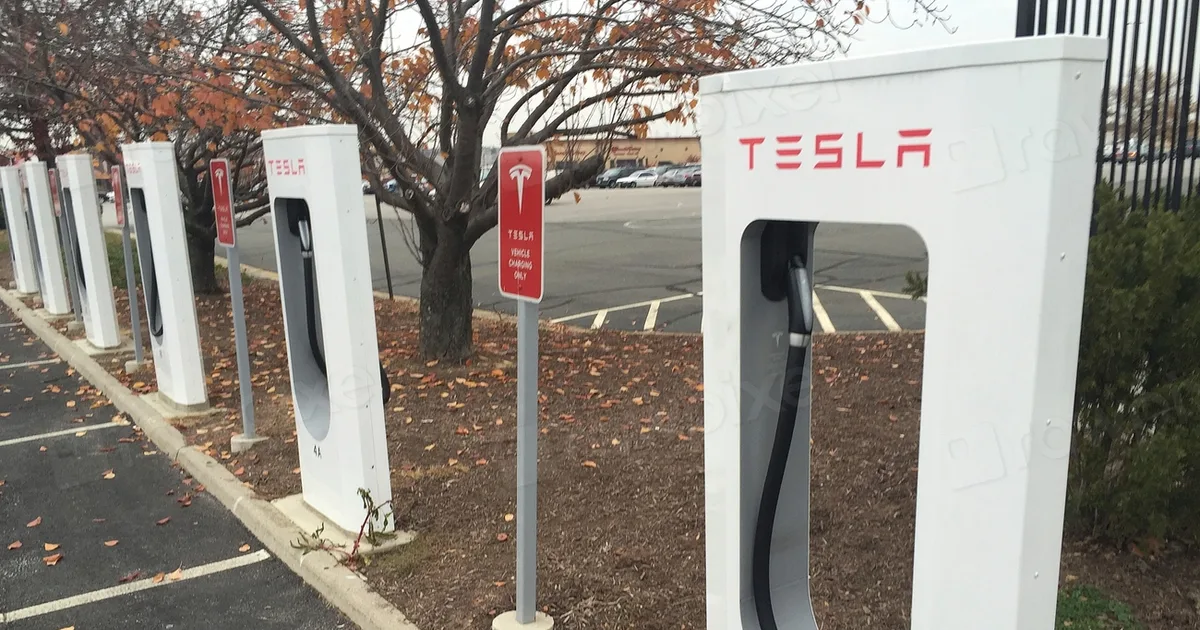
The case for an electric car usually rests on running costs, and that case is built almost entirely on charging at home overnight. Change that assumption and the arithmetic changes with it — which is why the most important question for a prospective EV owner is not which car, but where it will charge.
Why home charging is so much cheaper
Home charging bills you at your domestic electricity rate. Public charging bills you at a commercial rate that has to cover the hardware, the installation, the grid connection, network fees, payment processing and a margin. Public rapid charging is routinely several times the cost of home charging per unit of energy.
On top of that, many utilities offer time-of-use tariffs with a cheap overnight window aimed specifically at EV owners. Shifting charging into that window is where the real saving sits — frequently a larger difference than anything about the car or the charger.
This is worth acting on deliberately. Set charging to start inside the off-peak window rather than when you plug in. Most cars can schedule this themselves, so you may not need the charger to do it — a detail that saves money on the charger purchase too.
You probably need less charger than you think
The standard advice is to install the fastest home charger available. For a meaningful share of owners that is capacity they never use, because home charging is not about speed — it is about whether the car is full when you leave.
Level 1 is a standard household socket, adding roughly three to five miles of range per hour. An overnight window of thirteen hours delivers something like 40 to 60 miles. It needs no installation and no electrician.
Level 2 runs on a 240V circuit and adds roughly 15 to 40 miles per hour, filling almost any car overnight from almost any state of charge.
So if you drive 30 miles a day, Level 1 covers it and costs nothing. If you drive 60 or more, run two electric cars, get home late and leave early, or live somewhere cold enough that winter range drops noticeably, Level 2 earns its cost. Track your actual daily mileage for two weeks before deciding — it is usually lower than people estimate.
One honest caveat: Level 1 leaves no headroom. An unexpected long day means starting the next one short. If you value not thinking about it, Level 2 buys that peace of mind.
What public charging is actually for
Used as intended — road trips and occasional top-ups — public rapid charging is a convenience worth its premium. Used as a primary method, it is expensive and slow in a way that erodes the case for the car.
Costs vary considerably by network, and several factors change what you pay:
- Network membership. Most operators charge non-members a higher rate. If you use one network regularly, a subscription usually pays back quickly.
- Idle fees. Many chargers bill by the minute once your car finishes. Leaving a car plugged in after it has charged can add a surprising amount.
- Destination charging. Slower Level 2 chargers at hotels, supermarkets and car parks are frequently cheap or free, and if you are there for two hours anyway they are far better value than a rapid charger.
The charging curve, and why "20 to 80%" exists
DC fast charging does not deliver its headline power throughout. Charging is fastest in the middle of the battery's range and slows substantially above roughly 80%, where the car protects the cells by tapering the rate.
The practical consequence on a road trip is that charging from 20 to 80% can take half the time of charging from 20 to 100%. Two shorter stops are usually faster overall than one long one — which is the opposite of how people instinctively plan.
Preconditioning matters too: many cars will warm the battery before a planned rapid charge if you navigate to the charger in the car's own system, and a cold battery charges dramatically more slowly. In winter, this single habit makes a large difference.
Battery health
Two things are broadly accepted and worth acting on without anxiety.
Routine daily charging to 100% is unnecessary for most lithium chemistries, and many manufacturers suggest a lower daily limit — often around 80% — with 100% reserved for trips. Cars with LFP chemistry are commonly an exception, where periodic full charges are actually recommended. Follow your own manufacturer's guidance rather than general internet advice.
Heavy reliance on DC fast charging generates more heat and is associated with somewhat faster degradation than slow AC charging. Occasional use on trips is fine and is what it is designed for; using it as your only charging method is the pattern to avoid — which is another reason home charging matters.
If you have no off-street parking
This is the situation that decides whether an EV works for many households, and it deserves a straight answer rather than optimism.
Realistic options are workplace charging, which is often the best available and sometimes free; nearby destination charging where you already spend time; on-street charging where your local authority provides it; and lamppost or kerbside schemes in some areas. Cable-across-the-pavement arrangements are restricted or prohibited in many places for obvious reasons, so check local rules rather than assuming.
If none of those apply, be honest in the arithmetic: an EV charged mostly on public rapid chargers still avoids fuel and maintenance costs, but the running-cost advantage narrows considerably, and the convenience picture is quite different from the one in the brochure.
If you are planning a home installation, our ranked comparison of home EV chargers covers amperage, cable length, certification and scheduling, scored against the criteria in our rating methodology.
Electricity tariffs, network pricing and manufacturer charging guidance vary by region, utility and vehicle and change over time. Confirm current rates with your utility and follow your vehicle manufacturer's own battery guidance. Electrical work should be carried out by a licensed electrician to local code.