
HEPA, CADR and Room Size: How to Size an Air Purifier Properly
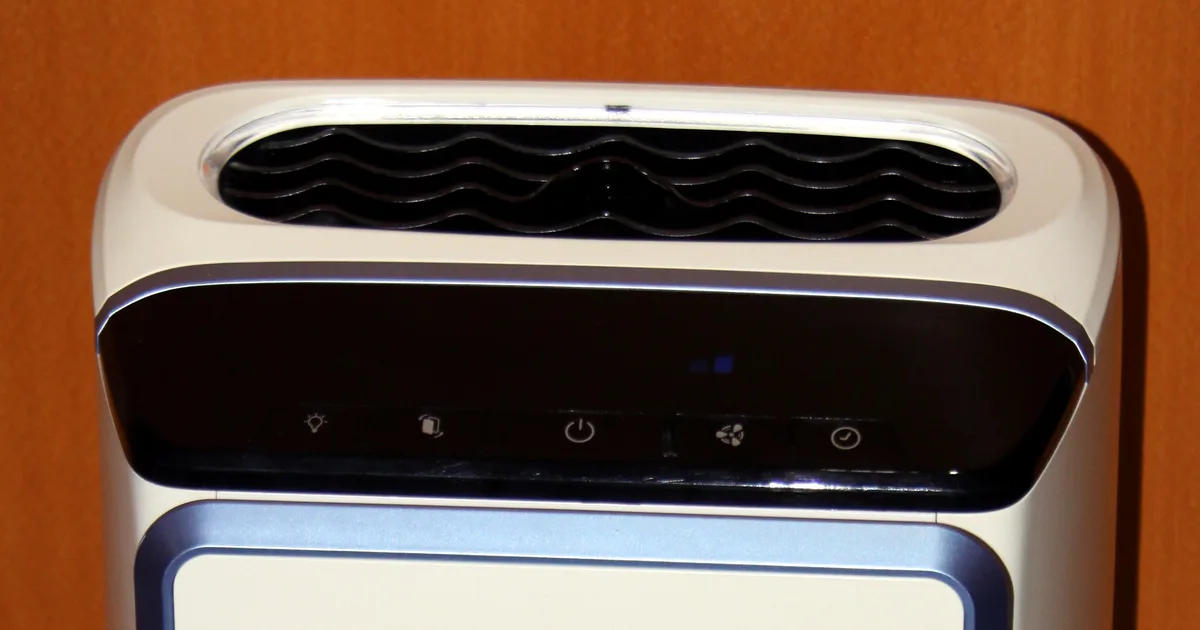
Air purifiers are sold on two numbers — a room size in square feet and a filter grade — and both are easier to misread than they look. A unit rated for your room can still be too small in practice, and "HEPA-type" is not HEPA. The good news is that the actual sizing maths is simple once you know which figure to use.
CADR is the number that matters
Clean Air Delivery Rate measures how much filtered air a unit actually produces, in cubic feet per minute, and it is tested independently. It is reported as three figures — for smoke, dust and pollen — because particle sizes differ. Smoke is the smallest and hardest, so the smoke CADR is the conservative one to plan around.
Square-footage claims, by contrast, are the manufacturer's own interpretation, usually calculated at the highest and loudest fan setting and often assuming a modest number of air changes. Two units with identical "up to 1,500 sq ft" claims can have very different CADRs.
The two-thirds rule
A widely used guideline: the smoke CADR should be at least two-thirds of the room's floor area in square feet. A 300 square foot room wants a smoke CADR of about 200 or more. That figure assumes standard eight-foot ceilings — if yours are higher, scale up proportionally, because what you are really filtering is volume, not floor.
Air changes per hour, and why allergy sufferers need more
ACH is how many times per hour the unit can process the room's entire volume of air. Two changes an hour is enough for general freshening. Four is the usual recommendation for allergies. Five or more is what you want for asthma, wildfire smoke, or a room with pets.
This is where the two-thirds rule and the marketing diverge most. A unit sized to a room's square footage often delivers around two air changes an hour — technically "rated" for the space, and not enough if the reason you are buying is allergies. The practical fix is to deliberately oversize: a unit rated for a larger room, run at a lower and quieter fan speed, will outperform a correctly-sized unit run flat out, and it will be much more pleasant to live with.
Filter types: what is worth paying for
True HEPA is a defined standard: it captures at least 99.97% of particles at 0.3 microns, which is the hardest size to catch. Look for the words "true HEPA" or "H13". Be wary of "HEPA-type", "HEPA-like" or "99% HEPA-style" — those phrases exist specifically because the product does not meet the standard.
Activated carbon handles what HEPA cannot: gases, cooking smells, volatile organic compounds and smoke odour. HEPA traps particles; it does nothing for smell. If odour is part of why you are buying, check the carbon quantity, which is usually given in weight. A thin carbon-impregnated mesh is a token gesture; a substantial carbon bed genuinely works, and it is the difference between a purifier that makes a kitchen smell better and one that does not.
Pre-filters catch hair and large dust before it reaches the HEPA layer. A washable pre-filter meaningfully extends the life of the expensive filter behind it.
Technologies to treat with caution
Ionisers and ozone generators. Some ionising purifiers produce ozone as a by-product, which is a respiratory irritant — the opposite of the goal. Ozone generators sold as air purifiers are a category health authorities have warned about repeatedly. If a unit has an ioniser, check that it can be switched off, and prefer models certified as low-ozone. Mechanical filtration does not have this problem.
UV-C. The concept is sound in principle, but effectiveness in a domestic purifier depends on intensity and dwell time, and in most consumer units the air moves past the lamp too quickly for much to happen. Treat it as a bonus, not a reason to choose a unit.
Running cost is where the money actually goes
Purchase price is the smaller half of the decision. Before buying, find out three things: what a replacement filter set costs, how often the manufacturer says to change it, and whether the filters are proprietary.
Typical HEPA filter life is six to twelve months, and carbon often less, particularly in a kitchen or a smoking household. A cheap purifier with expensive proprietary filters replaced twice a year can cost far more over three years than a pricier unit with reasonably priced filters. Do that three-year arithmetic before choosing — it frequently reverses the ranking.
Electricity is a smaller factor but not nothing, since these units run continuously. Look for an ENERGY STAR rating and check the wattage at the speed you will actually use.
Noise decides whether you keep using it
The most common reason a purifier stops working is that its owner turned it down or off because it was annoying. Manufacturers usually publish a decibel range; the figure at the lowest setting matters more than the maximum. Anything in the mid-twenties is genuinely quiet, and by the mid-fifties you will notice it in a bedroom.
This is the strongest practical argument for oversizing. A larger unit at speed one is quieter and cleaner than a smaller unit at speed four.
Placement, and the thing people get wrong
An air purifier needs to move air, which means it needs space around it. Pushed into a corner or against furniture, intake is blocked and performance drops substantially. Give it clearance on all sides, keep it off deep carpet if the intake is on the bottom, and place it reasonably near where you spend time rather than in an unused corner.
One unit filters one room. Air does not travel usefully between rooms through a doorway, and a purifier sized for a whole house does not exist unless it is integrated into ducted HVAC. If you want clean air in the bedroom and the living room, that is two units — which is another argument for choosing on CADR-per-dollar rather than buying one large showpiece.
And close the windows. A purifier competing with an open window is filtering the outdoors, which is a fight it will lose.
What a purifier will and will not fix
Reasonable expectations: measurably less airborne dust, pollen, pet dander and smoke particulate; less settled dust over time; and, with adequate carbon, noticeably reduced odours. Many people with allergies report better sleep with an adequately sized unit running in the bedroom.
What it will not do: fix mould, which needs the moisture source removed rather than the spores filtered; remove dust already settled on surfaces; help much with humidity, which is a different appliance; or compensate for a house that is not ventilated. If a room smells persistently musty, a purifier is treating a symptom.
If you want a shortlist, our ranked comparison of air purifiers covers how the leading models differ on filtration, coverage and running costs, scored against the criteria in our rating methodology.
This is general information, not medical advice. If you have asthma or a significant respiratory condition, discuss air quality measures with a clinician. Specifications, filter prices and certifications vary by model and change over time — confirm current details with the manufacturer before buying.