
Sleeping Bag Temperature Ratings: What the Numbers Actually Mean
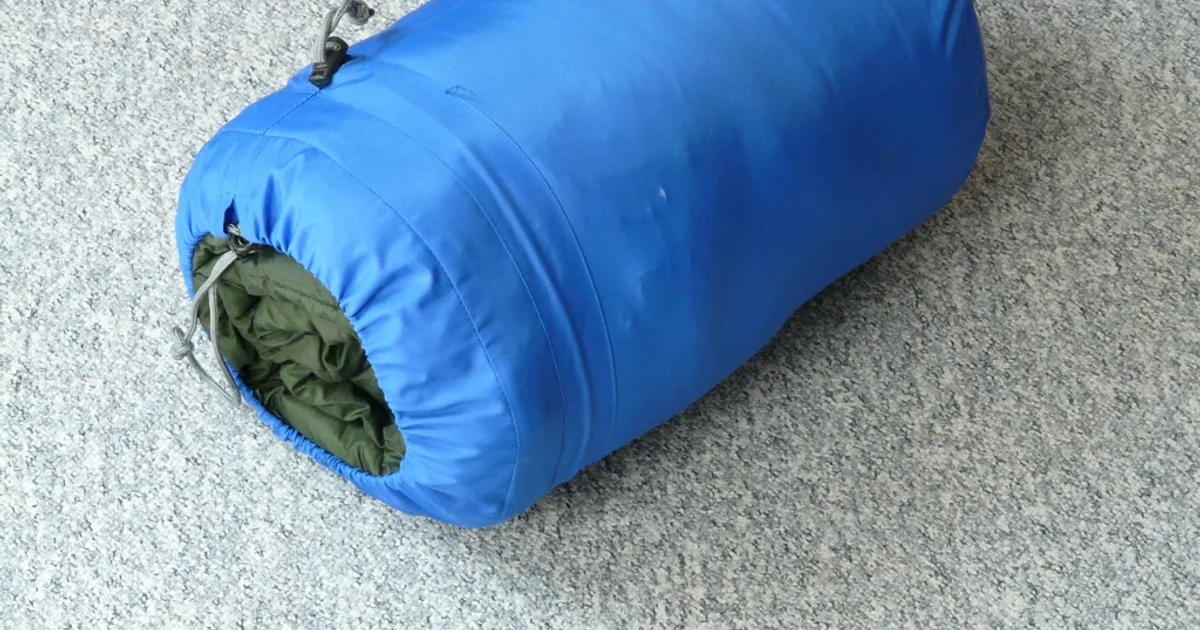
Nearly every complaint about a sleeping bag comes down to the same thing: the buyer read a number on the label and assumed it meant something it does not. A "20-degree bag" is not a bag in which an average person is comfortable at 20 °F. Understanding what the figure actually describes is the single most useful piece of knowledge in this category.
One bag, three different numbers
Bags tested to the ISO standard (which replaced the older EN standard and works the same way) are tested on a heated mannequin fitted with sensors, dressed in a base layer, lying on a pad of defined insulation. The test produces several figures, of which three appear on labels.
Comfort. The temperature at which a "standard woman" — the test's model for someone who sleeps cold — can sleep comfortably in a relaxed position. For most buyers this is the honest number.
Limit. The temperature at which a "standard man" — the model for someone who sleeps warm — can sleep for eight hours in a curled position without waking. Curled up is the operative phrase. This is survival-adjacent comfort, not restful sleep.
Extreme. The temperature at which a standard woman can survive six hours without hypothermia. It describes not dying. It should play no part whatsoever in choosing a bag, and it exists on labels largely for regulatory reasons.
Comfort and limit are typically about 10 °F apart. Marketing almost always quotes the limit figure, because it is lower and sounds more capable. So a bag sold as a "20-degree bag" is often comfortable nearer 30 °F — and that gap is exactly the one that produces a miserable night.
The rating assumes conditions you may not have
The test is standardised, which is what makes it useful for comparison. It also means it assumes a specific setup, and every deviation shifts your real-world result.
The mannequin wears a long-sleeved base layer and long johns. Sleeping in less is colder. The mannequin lies on a pad with a defined insulation value, so a thinner pad is colder — significantly so, as below. The mannequin does not arrive at camp dehydrated, underfed or exhausted from a long day, all of which reduce how much heat you generate. And the mannequin is the test's statistical average; individual metabolism varies enormously.
None of this makes the rating useless. It makes it a comparison tool between bags tested the same way, rather than a promise about your night.
When there is no ISO number at all
Testing is voluntary, and not every bag on sale has been through it. If a bag lists a single temperature with no mention of ISO or EN testing, that number is the manufacturer's own opinion.
Some brands are conservative and their self-assigned numbers are trustworthy. Others are optimistic. The point is that an untested number cannot be compared with a tested one, and where the price gap between two bags seems too good to be true, the absence of testing is often part of the explanation.
Look for explicit wording — "ISO 23537 tested", or published comfort and limit figures rather than a single number. A brand that publishes both is telling you it has done the test.
Your pad decides more than your bag does
This is the part that surprises people, and it explains most cold nights in an adequately rated bag.
Insulation works by trapping air. Underneath you, your body weight crushes the fill flat, and crushed insulation traps almost nothing. Whatever is under the bag is doing very little — which means on cold ground, the sleeping pad, not the bag, determines whether you are warm.
Pads are rated by R-value, a measure of resistance to heat flow. Higher is warmer, and the scale is additive: two pads stacked give you roughly the sum of their values, which is a genuinely useful trick for occasional cold trips.
As a rough guide: around R-2 for summer, R-4 or so for three-season use, R-5 and above for snow. Since 2020 most manufacturers test to a common standard, so R-values are comparable between brands.
Pairing an expensive winter bag with a thin summer pad is the most common mistake in cold-weather camping, and no amount of extra down compensates for it. If your budget is fixed and you are choosing between a warmer bag and a warmer pad, the pad is usually the better spend.
Down, synthetic, and what fill power means
Down provides more warmth per ounce and per litre of packed space than any alternative, and a well-cared-for down bag lasts decades. Its weakness is water: wet down clumps and stops insulating almost entirely. Hydrophobic treatments slow this down; they do not eliminate it.
Synthetic fill retains a useful fraction of its warmth when damp, dries much faster and costs less. It is heavier and bulkier for the same rating, and it loses loft over years as the fibres degrade.
The rule that holds up in practice: down for cold and dry, synthetic for wet and mild, and synthetic for anything that will live in the bottom of a canoe.
Fill power confuses people because it sounds like a warmth rating. It is not — it is a quality measure, describing how many cubic inches one ounce of the down occupies. 850 fill power down lofts more than 650, so a bag needs less of it for the same warmth and comes out lighter and more compressible. It also costs substantially more.
What actually determines warmth is total fill weight — how much down is in the bag. A bag boasting 900 fill power with very little of it is a light bag, not a warm one. Fill power tells you the efficiency; fill weight tells you the quantity. You need both numbers to know anything.
The construction details that change the rating in practice
- Draft collar — an insulated tube around the shoulders that stops warm air pumping out when you turn over. On bags rated below roughly 20 °F it is close to essential, and its absence is a common reason a bag underperforms its label.
- Draft tube behind the zipper, so the zip line is not a cold stripe down your side.
- Baffle construction. Sewn-through baffles stitch the outer and inner shells together directly — lighter, cheaper, and creating a cold seam at every stitch line. Box baffles use fabric walls that let the down loft fully everywhere. Serious cold-weather bags use box baffles.
- Hood shape and cinch. A large share of heat loss is through the head. A hood that closes properly around your face is doing real work.
- Fit. Too large is as bad as too small — excess space is dead air your body has to heat. A bag that fits closely is warmer than a roomy one with identical fill.
Storage: the habit that decides how long the bag lasts
A sleeping bag kept compressed in its stuff sack loses loft permanently, and loft is the entire mechanism by which it keeps you warm. A bag stored compressed for a year can measurably underperform its rating, and the damage does not fully reverse.
Store it loose — in the large cotton or mesh sack that came with it, hung in a wardrobe or laid flat under a bed. Use the compression sack only while travelling, and unpack it as soon as you get home.
Wash rarely, with a down-specific or technical wash rather than ordinary detergent, and tumble dry on low heat with a couple of dryer balls to break up clumped fill. Using a liner keeps body oils off the down and means you almost never need to wash the bag itself.
This single habit is why a carefully stored ten-year-old bag frequently outperforms a three-year-old one that lived crushed in its sack.
What to do with all this
Find the comfort rating, not the advertised one. Confirm it was ISO tested. Check the pad you own has an R-value appropriate to the ground you will sleep on. Then, if you sleep cold, buy a bag rated roughly 10 °F below the coldest night you expect — and remember that a bag that is too warm can be vented, while one that is too cold cannot be fixed at two in the morning.