
Why Cats Don't Drink Enough Water (and What Actually Helps)
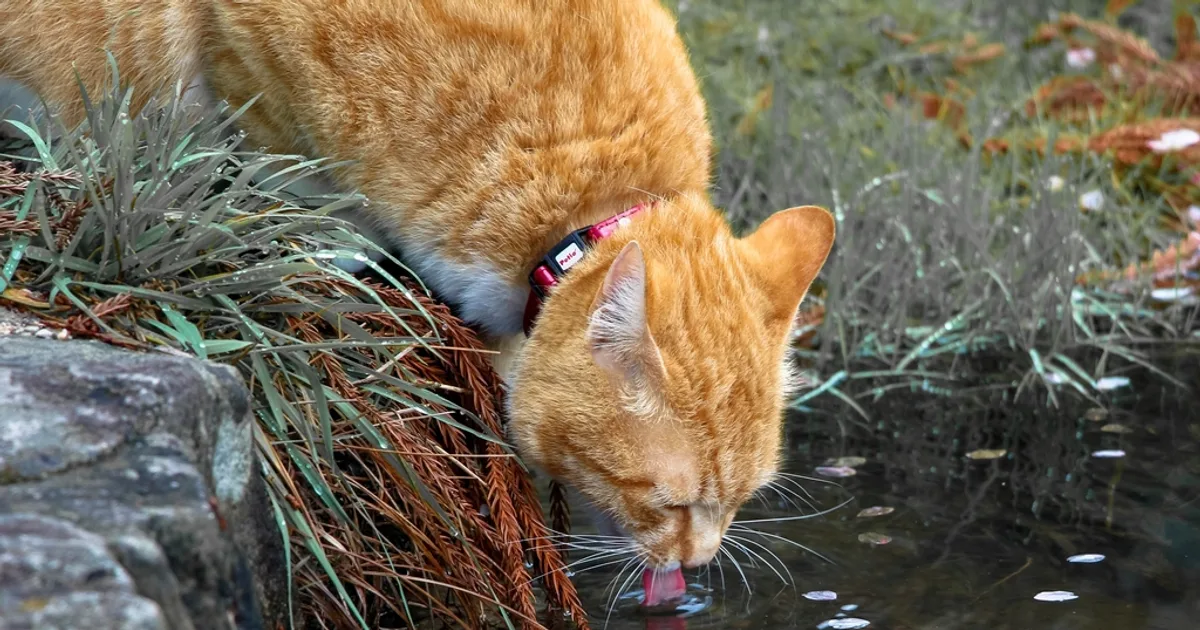
Cats are descended from desert-dwelling ancestors that got nearly all their water from prey. That evolutionary history left them with a notably weak thirst drive — unlike dogs, cats do not reliably drink more to compensate when their food is dry.
It matters because two of the most common problems in housecats, feline lower urinary tract disease and chronic kidney disease, are both influenced by hydration. Increasing water intake is one of the few genuinely cheap preventive measures available to an owner.
Where the water actually comes from
A cat eating prey takes in food that is roughly 70% water. Wet cat food is similar. Dry kibble is around 10%.
A cat on dry food alone would need to drink substantially more to reach the same total intake, and studies of feeding patterns consistently find they do not fully make up the difference. The result is a cat that is not clinically dehydrated but is running drier than it evolved to, producing more concentrated urine — which is the condition under which crystals and stones are more likely to form.
The single most effective change is therefore not a fountain or a bowl. It is including wet food in the diet. Even replacing one meal a day makes a measurable difference to total intake.
Whisker fatigue is real and easy to fix
Cat whiskers are densely innervated sensory organs, not decoration. A deep, narrow bowl means the whiskers brush the sides constantly while drinking, and many cats find that unpleasant enough to cut the session short or avoid the bowl.
The fix costs almost nothing: use a wide, shallow bowl where the cat can drink without its whiskers touching the sides. Owners who make this one change often report a cat that suddenly drinks far more, having assumed it simply was not thirsty.
Placement matters more than people expect
Several feline preferences are consistent enough to act on.
Away from food. In the wild, water near a carcass is likely contaminated, and many cats retain a preference for drinking at a distance from where they eat. The standard arrangement of bowl-beside-bowl works against that instinct.
Away from the litter tray. For obvious reasons, and further than most people place it.
Multiple locations. Several water sources around the house get used more than one. In a multi-cat home this also avoids a confident cat guarding the only supply.
Not in a corner. Cats prefer to drink where they can see the room. A bowl facing a wall with the cat's back exposed is less appealing than one with a view.
Somewhere quiet. Next to a washing machine that starts mid-drink is a bowl that gets abandoned.
Bowl material
Ceramic and stainless steel are the better choices — non-porous, easy to clean properly, and they do not hold odours.
Plastic scratches, and those scratches harbour bacteria that rinsing does not remove. Plastic is also associated with feline chin acne in some cats. If you use it, replace it once the surface is visibly scuffed.
Whatever the material, change the water daily and wash the bowl properly. A film you can feel with a fingertip is biofilm, and cats are considerably more sensitive to it than we are.
Do fountains help?
For many cats, yes. Moving water is more attractive than still water — partly because it reads as fresher, partly because the sound and movement attract attention.
Two honest caveats. Not every cat prefers one; some are wary of the noise and movement, so introduce a fountain alongside the existing bowl rather than replacing it. And a fountain is a warm, circulating environment that fouls faster than a bowl if neglected — it needs the pump opened and brushed weekly, or it becomes less hygienic than what it replaced.
If you buy one, prioritise a wide shallow drinking surface, a quiet pump, and a design that genuinely comes apart for cleaning.
Other things that work
- Add water to wet food. A tablespoon or two stirred in is usually accepted without complaint and increases intake directly.
- Try a dripping tap. Many cats that ignore bowls will drink from a running tap. That is information rather than an inconvenience — it tells you the cat prefers moving water.
- Use a wider, fuller bowl. Cats often prefer water filled to the brim, which lets them drink without lowering their head into a container.
- Ice cubes interest some cats and cool the water in summer.
Signs that need a vet rather than a new bowl
Increasing water intake is preventive. Some changes point to disease and need investigating rather than managing.
A sudden increase in drinking and urination is a classic early sign of kidney disease, diabetes or hyperthyroidism, and warrants an appointment rather than satisfaction that the new fountain is working.
Straining in the tray, frequent visits producing little, crying while urinating, or blood in urine need attention the same day. In male cats, urinary blockage is a genuine emergency and can be fatal within a day or two.
Signs of dehydration itself include lethargy, sunken eyes, and skin that stays tented when gently lifted at the scruff.
Measuring whether any of this is working
Water intake is hard to eyeball, particularly in a multi-cat home. Two practical approaches give you something real to judge by.
Measure the bowl. Fill with a known volume, top up at the same time daily, and track roughly how much disappears. Account for evaporation by leaving an identical bowl somewhere the cats cannot reach and subtracting the difference.
Watch the litter tray. A better-hydrated cat produces larger, more frequent urine clumps. That is a more useful signal than bowl level, because it reflects what actually reached the kidneys. A sudden change in clump size or frequency in either direction is worth mentioning to your vet.
A rough guide is that a cat needs somewhere around 50ml of water per kilogram of body weight daily from all sources combined — food included. A cat eating mostly wet food is getting much of that without drinking at all, which is exactly why a cat on wet food appearing to drink very little is usually not a concern.
If you are comparing equipment, our ranked comparisons of pet water fountains and cat food cover the options, scored against the criteria in our rating methodology.
This is general information, not veterinary advice. Any change in drinking, urination or appetite should be discussed with your vet, particularly in an older cat.